My Life - How I think and how I live...

My Scariest Surgery

Forced to Gamble

In 1977, I was the first pregnant patient with a Medtronic pacemaker, making me a case study or a pregnant guinea pig.  Everyone, except me, was concerned. The delivery entailed a full house, a cardiologist-approved obstetrician, a heart surgeon, Medtronic representative, and students from IU’s medical school.  All went smoothly, so from that point on my doctors and family relaxed.  I had two daughters.  The second daughter was of no concern.  The only doctor available ignored me as he ran from room to room delivering babies. When I screamed that I was going to push the baby out, the doctor ran in and caught her.  I rarely told friends I had a pacemaker.  My pacemaker peers were 60+ years old.

Over the years, pacers improved, but in the beginning, there were recalls, infections, one even erupted through my skin. Didn’t faze me. I was young.  I was immortal.

In 2015, forty-three years after my initial implant, my cardiologist said my surgeries were becoming complicated.  He referred me to “the best” electrophysiologist, Dr. Keating, who questioned me when I told him not to move the pacemaker location, “Leave it buried. I don’t want a bump on my chest.”  He looked surprised and asked if I still cared. 

“Of course, I care.  My chest is the only good part of my body.  I don’t want a bump showing!”

This young surgeon didn’t care if I had a chest-bump. Normal pacemaker placement is safer with easier access.  We scheduled surgery. I was glad he was skilled, but I wasn’t too happy with his attitude.

Following surgery, he came to the waiting room dripping sweat, still in his scrubs, “Tell your mom I did what she wanted.” He also replaced some leads and worked around lots of scar tissue.  He told them the next surgery would be major. I don’t remember if they told me.   I liked my new surgeon.

Six years later, on Labor Day 2021 Dr. Keating left me a very long rambling voicemail concerning my upcoming surgery. What?  Was he bored?  Was he going through a divorced? What doctor does that? My cardiologist told me not to worry, “He is very thorough and cares about his patients.”

In November, my daughters and I met with Dr. Keating concerning my next surgery. I had an old lead that needed to be replaced.  It was dangerous due to extensive scar tissue and debris.  My insides were a mess because of 40+ years of surgeries.  I needed a six-hour pre-op a week before surgery.  In the operating room there would be a heart surgeon and blood for a transfusion.  There was a possibility Dr. Keating could nick the artery trying to remove the lead, which would cause immediate drastic blood loss.  At that point I’d receive donated blood and the heart surgeon would perform open heart surgery to stop the bleeding.  The surgery could go one of three ways.  Most likely he’d remove and replace the lead, clean up scar tissue and move the location of the pacer. The second possibility was open heart surgery and the third, but highly unlikely, was death.

The surgery would be scheduled for January.  I didn’t remember much after he said “death.” The odds were good, but I don’t gamble if I can’t afford to lose.

Shortly after the appointment the doctor’s office called to see if I could do the surgery on December 8.  I told them, NO.  Who would choose to die right before Christmas?  I called my daughters.  They wanted it done ASAP.  I called the office back and we set up the pre-op, the surgery, and post-surgery appointments.  December 8,2021 could be my expiration date.

I had about three weeks to prepare. 

Surgery Prep

Prepare for the worse and hope for the best. If I died, I wanted the least amount of damage.  What scared me most about a December death was the timing. It would ruin Christmas.  I’ve pulled some doozies, but it’s always been funny after time passes.  This might never be funny. My mind raced.

I looked at my options. Option One was best, but what about the other two?  Which would be best?  With the second, I could end up needing too much care.  What if it led to dependency?  What if the kids, filled with guilt, reached their limits caring for me?  I think they would have chosen Option Two over Option Three, but I chose Three. If I died, I wouldn’t know it.  I’m pretty sure I’d make it to heaven, eventually.  Until then I’d probably sleep without dreams.  Not too bad.   

My girls and siblings lied. They told me I’d be fine. They weren’t worried.  My good friends threatened me. I was not allowed to die.

I discussed death only with Jan because she was brave enough to question me.  I told her that all mothers want their children happy.  If I died, I’d be fine. They were allowed to mourn, wail and become despondent for about a month, then move on!  She promised she would.  I was worried about Jill and Dee. Jan promised to take care of them.  Again, Jan told me the surgery would be successful.  She was not worried at all.  This from the kid who previously said she worried about me dying many times.

It’s unsettling to have a death date. I told very few people.  I knew there’d be lots of phone calls, advice, and false assurances. Even worse, if I didn’t die, I’d look like I wanted attention.  I needed to be alone.

I cleaned my house so when emptied it’d not be disgusting.  I paid two months of utilities.  I wrote long love letters to each child and grandchild. I sent a text to a priest friend telling him my kids might need him December 8.   I wondered if preparing my Last Will and Testament a few months prior was an omen or a coincidence. I’d put it on my dresser before leaving for surgery. Each night when I went to bed, I thought about my December death.  I talked to God, a lot.  How would I feel being dead?  Would I be able to see my body as I left it?  Would I have a choice to come back, but choose not to?  Who would go to my funeral?  If a memorial DVD was made, would the pictures be flattering?  Who would do the eulogy? Should I write my own? I didn’t have a church because I’m a floater. I had no funeral arrangements.  Poor kids.  Too late now. 

You can only do so much in three weeks.

The Surgery

When we arrived at the hospital at 5:30 AM, my brother Joe was waiting. Even though the hospital ruled only two people could be in the waiting room, my family ignores rules. Jill, Jan, Dee, Diane and Joe waited for over seven hours while Diane nervous rambled only to occasionally break down and say she couldn’t lose me because we were Thelma and Louise. We were supposed to die together. I wasn’t there, but I imagine all these confident people were anxious and very happy when Dr. Keating declared surgery a success. God chose Option One. 

Option-One Recovery

When I woke up, I did not realize this recovery would be much different than others.  My blood pressure hovered at 40/30 due to blood loss. I was weak and disoriented. Hospital discharge was delayed, but I was able to leave on day three with instructions on how to handle wounds and do medications to help blood pressure.  My girls spent the nights with me in the hospital and then they brought me home. They stayed around the clock. They charted, handled meds, fed me, and dressed me.  They took care of my dog, did laundry, and answered phone calls. They assumed nurse roles taking me back to hospital where a blood clot was detected.

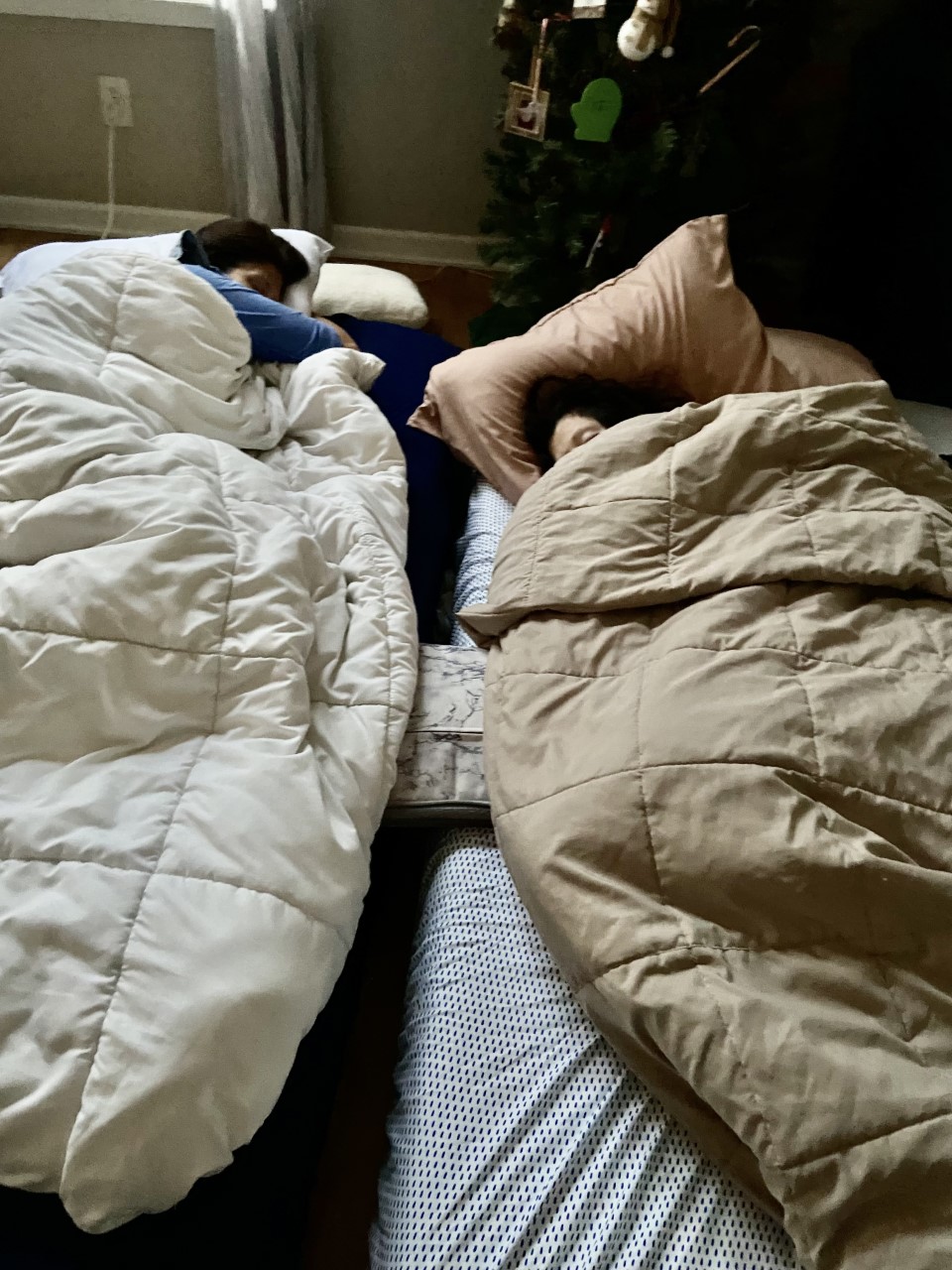
My sister, Elaine came to relieve them on the 4th day.  Both girls were so excited that Aunt Elaine was coming, that they stayed.  Diane and Joe also came.  I witnessed a deep love and an intense fear of missing out.  Joe suggested a slumber party, which we planned for the following day.  I was still on pain meds when Joe arrived with hard coffee and good beer.  “Only for big surgeries, do we plan slumber parties,” he said as he entered my home.

Elaine stayed with me four additional nights, until I was able to spend the night alone. Alice sent such a wonderful treat basket that I almost reordered, but it was $75.  Neighbors left gifts on the porch. Diane brought snacks, food, meds, a blood pressure machine, and probably spent hundreds of dollars.  Pay her back? She’d refuse.

Jan and I went for a follow up appointment a few weeks ago.  My red blood cell count is very low, but not low enough for a transfusion.  It may be three or four months to get the count back up.  This makes me tired, but otherwise, I’m great.

I knew my family loved me, but I overwhelmingly felt it after surgery.  I could not be a more grateful or lucky person. I could not have come home without help and never did I worry.  I’ve got three siblings and two daughters who put everything on hold, even their own families, during the holidays to take care of me.

I’m so fortunate I got Option One.  I witnessed the girls sacrifice over and over to help me.  I’m one-month post-op and they are still checking on me every day, offering to help, and taking care of my baby Maltese, Ted.   Lucky for them I know how to set them free.

Thank you.  I love you.   I’m good.

Jill and Jan at The Trump Hotel in Miami Spring 2021 (on vac with Diane, Lori, and me)
Jill and me at Dominican Republic (of Mexico because we are crazy) Spring 2021
AFTER SURGERY Waiting on Aunt Elaine’s arrival next morning
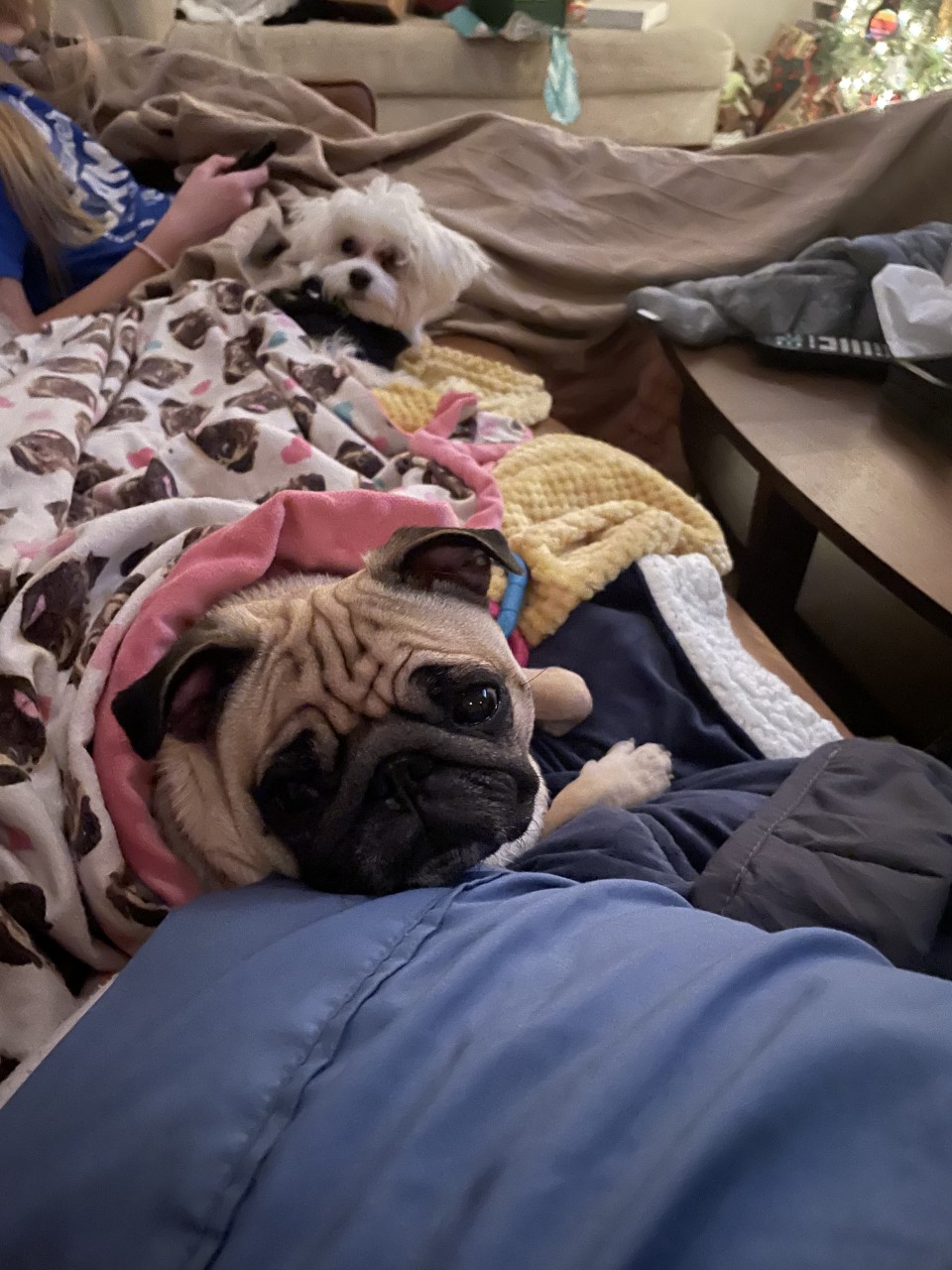
Ted at his temporary home with PUG Marge
Standard
My Life - How I think and how I live...

About us Catholics…

I did not write this.  I pulled it from a Catholic site. I can’t give credit because I can’t remember the site.  If someone else writes it,  and writes it well, then I have no problem stealing it.  It’s good info for my non-Catholic friends.

Not True…

Catholics Worship Mary

Catholics often carry and pray Rosaries or have statues of Mary in their homes, so it can appear that Mary is on the same level as God. However, Catholics do not worship Mary, and doing so would be a grave sin in the Catholic faith. Instead, she is given great honor. After all, Mary is the mother of Jesus, who is God. Therefore, Mary is the Mother of God and deserves honor and respect. The Fourth Commandment is “Honor thy father and mother.” Jesus would never break this commandment and neither should we. When Catholics say they are praying to Mary, they mean that they are praying for her intercession—that she will take their prayers directly to Jesus, her own son. It’s a similar concept to asking someone you know to pray for you. Intercessory prayer is very different from worship that is due to God alone.

Catholics Aren’t Saved

Many well-meaning Protestants try to “save” their Catholic friends and are genuinely concerned for their eternal salvation. However, Catholics define “saved” in a different way than Protestants. Catholics believe that the sacrament of Baptism is the beginning of salvation when the baptized person is cleansed of Original Sin (the sin of Adam and Eve, passed on to all humans). After Baptism, Catholics must remain in a state of grace in order to enter heaven at death. Certain sins, called mortal sins, are very serious and take away grace. To commit a mortal sin, the sin must be serious, and the sinner must know the sin is serious and willingly commit it. There is no “laundry list” of mortal sins, but such acts as murder, adultery and worship of idols could be considered serious. Grace is restored when the sinner receives forgiveness through the Sacrament of Confession. Therefore, a Catholic must be in a state of grace to be “saved” and enter heaven and eternal life with God.

Catholics Must Obey the Pope

Catholics view the pope as the leader of the Catholic Church, but he is not an absolute authority. Like any leader, the pope is human and is subject to sin and human weakness. He is entitled to express opinions and give advice to Catholics; however, these are not necessarily official Church teachings. The only time the pope is considered infallible, or giving a teaching that is free from error and inspired by God, is when he speaks “ex cathedra,” or “from the chair.” This rarely occurs; in fact there are only two ex cathedra teachings given in the entire 2000-plus year history of the Church. Catholics obey God and Church teachings and doctrines, which also bind the pope.


Standard
My Life - How I think and how I live...

Boring Peacocks

How many times have I tried to listen to a boring sermon… One time I told a priest friend how boring a different priest’s sermons were and was told we go to church for the mass. What? I thought if we missed the homily we missed mass; it’s that important. I like how Pope Francis puts it right out there.

He told a group of new priests he was ordaining to make sure “that your homilies are not boring, that your homilies arrive directly in people’s hearts because they flow from your heart, because what you tell them is what you have in your heart. Examples edify, but words without examples are empty words, they are just ideas that never reach the heart and, in fact, they can harm. They are no good..

(-for those giving a sermon) The homily must be intent only on pleasing God and not himself. It is ugly to see a priest who lives to please himself, who acts like a peacock strutting around.”

So…I think about this boring stuff…if we listen and speak from the heart we will not be boring because we will connect with the other person.

Peacocks never connect.

Standard
My Life - How I think and how I live...

My Father

dad

“What would Dad say?”

My sister, Diane, asks me that question at least 3-5 times a year. We decide he’d say something like, “He’ll figure it out.” “If she does that she might not like what happens.” “He won’t do that again.” “She’ll learn.” Or maybe, “That’s malarkey.” Dad rarely gave orders; he’d briefly explain possible consequences; then we faced them. It could be scary. He taught us to think and make decisions. We didn’t need to beg or argue. The choice was usually ours.

Growing up was easy. I don’t remember punishments or lectures. I don’t remember a lot of restrictions or pressure to perform. I never heard screaming or fighting. Dad was predictable. We ate dinner together then he’d hang out with Mom and/or the neighbors. I heard laughter most every day. Dad had lots of friends. He liked everyone. If there was someone he didn’t like he never told us. Neighbors, co-workers, high school buddies, garbage collectors, construction workers, doctors, CEOs, blacks, whites, immigrants, Catholics, Protestants, … they were all the same.

I was a 6th grader in 1965 when our family went to the riverboat in St. Louis. After the boat ride we went back to visit with people Mom and Dad met on the boat. All the parents visited on a big front porch and all the kids played in the yard. We were the only white kids. In 1968, when I was in 9th grade,  there was a lot of whispering going on in our neighborhood. Lesbians moved in across the street. Dad was one of the few, or maybe the only one, who didn’t seem to notice. He treated them same as all other neighbors.

Growing up, I never missed mass on Sunday. If Mom and Dad had partied late Saturday night and were not feeling too chipper we’d head upstairs to the choir loft. We had rosaries, pictures of Jesus, the pope, John F. Kennedy, Jr. and a Blessed Mother statue in our home because that’s how cradle Catholics decorated. I’m grateful our parents introduced us to Jesus.

The best thing Dad did for us was love our Mom until the end. The end was challenging and not once did Dad complain. Mom and Dad were in heaven before age 65.

Today, I imagine he’s laughing and having a beer with Mom… exactly as it should be.

Happy Father’s Day, Dad.

Standard
My Life - How I think and how I live...

Almost Sudden Death

It’s December 23, 2014.  Mothers are not supposed to die two days before Christmas.

Cancer doesn’t care about mothers or children.

Karen was my grade school best friend.  I never quite figured out why she chose me.  She was athletic; by far the cutest girl in the class.  I was clumsy, immature, housed in a Milwaukee brace, and easily the most unpopular kid in the class. Karen was shy and I was ridiculously social.  I suppose we were a good match.

Karen and I met Paula in high school.  Paula was a cheerleader and by far the cutest girl in our high school class.  I had lost the brace, but otherwise I had not changed. Karen and Paula became good friends.  I moved in another direction.  It wasn’t something we decided; it just happened.

We graduated.  We lost touch for nearly 20 years and reconnected at a class reunion.  We more than reconnected.  We realized our friendships never ended. Karen, Paula, and I met for lunch, we met other classmates for drinks, we relived the past and we shared what we had lost over the years.

November 2014, I get a message from Karen’s daughter.  “My mom has an aggressive cancer.  Will you call my dad?”  How could that be?  We had been together in July and Paula had tried to set a lunch date in October.  Karen hadn’t responded, but so what?Sometimes it took a few months to set something up.  We were busy.  It was nothing for one of us to procrastinate or “forget.”

First, I call Paula.  She had received the same text.  I call Howard. He wants us to visit Karen in the hospital. We don’t talk about “aggressive cancer.”

When Paula and I walk into the hospital room, I’m not sure my face is able to disguise my shock.  What happened?  Karen is swollen and bald and discolored. Tears fall from her eyes, but she smiles and asks how we’re doing.  For two hours we stay with Howard, Katie, and Karen.  We reminisce; we talked about everything but the elephant in the room.  We laugh, a lot.

Howard walks us to the elevator and tells us there is one more thing they can try to save Karen.  He doesn’t look hopeful.  There are no words to make it better.  We hug.

I was able to see Karen one more time before she died.  Our friend, Dawn, came in from Dallas.  Dawn and I visited.  Karen knew she was dying and it would be quick.  I didn’t talk a lot. Dawn managed to nervous-ramble for over an hour about clothes, and kids, and the past.  Karen went from smiling, to crying, to sleeping. When we left, I kissed her good-bye. I knew I’d never see my friend again.

KAREN

Karen is 3rd from the right; beside me, of course!

Standard
My Life - How I think and how I live...

When I Grow Up

I’m afraid I’m going to die before I grow up.

I’ve grown old.  I’ve met at least the minimum requirements of sister, daughter, cousin, niece, wife, mother, grandmother, friend, and Catholic.  I’ve been a file clerk, fast food employee, bus driver, freelance writer, secretary, advocate, facilitator, and trainer.  I’ve been on boards and in clubs; I’ve organized retreats and reunions.  I done enough and loved enough for a decent eulogy and obit.

I haven’t done what I was going to do when I grew up.  I haven’t written a book.  I haven’t even attempted to write a book.  I ventured toward the book idea 30 years ago by finding out if I could write something others would read.  I sent query letters to magazines by the truckload.  I was ignored or rejected for months then given an assignment by a local magazine.  I wrote.  I obeyed word limits, met deadlines, found good sources, researched, interviewed experts and wrote easy to read, entertaining, thoughtful articles.  I was a monthly contributor for nearly six years until I chose to quit.  Writing 30 years ago required a lot more leg work than it does today.  There was no easy-access research.  I went to the library.  I used a thesauruses and dictionary, electric typewriter, and finally a word processor. Buying five copies of a magazine and seeing my byline was the biggest payoff.  I figure my income was probably $5 an hour, at best.

I stopped writing and drove a school bus for my daughters’ Catholic grade school.  Other than the writing job, I rarely looked for work.  I was a lucky stay-at-home mom.  I had options and people knew it.  That’s how I ended up behind the wheel of a run-down stick shift dilapidated yellow school bus.

My life has been good.  Of course, a good life is not a life without crosses.  I faced health challenges, my parents died young, and my 34-year marriage failed.  I had times when I wondered if I’d recover.  All of this was necessary.  I often think of the Elizabeth Kubler-Ross quote, ” The most beautiful people we have known are those who have known defeat, known suffering, known struggle, known loss, and have found their way out of the depths. These persons have an appreciation, sensitivity, and an understanding of life that fills them with compassion, gentleness, and a deep loving concern.  Beautiful people do not just happen.”

Getting old can be ugly, but unless we give up or become resentful and self-centered we are eventually beautiful.  I have become beautiful.

It’s time to write.

Standard
My Life - How I think and how I live...

Follow up … Genetics, I’m Lucky

I used to wonder what it was about me that I knew I’d be okay.  Happiness, even if elusive for the moment, was sure to return.  It’s as if I could not bear to live a life of unhappiness.  I’ve learned some of it is my genetics, but the other 40% is because I’ve just about mastered the habits of happy.

Martin Seligman, the father of positive psychology, theorizes that while 60 percent of happiness is determined by our genetics and environment, the remaining 40 percent is up to us. There is hope for those not genetically inclined.

The Habits Of Supremely Happy People

They surround themselves with other happy people. Dump the Debbie Downers and spend more time with uplifting people (my name is Debbie, but I’m not a downer!!).

They smile when they mean it. Fake smiling can worsen a mood.

They cultivate resilience. Happy people know how to bounce back from failure.

They try to be happy.  Yep — it’s as simple as it sounds: just trying to be happy can boost your emotional well-being.

They are mindful of the good. Happy people give attention to their small victories, too.

They appreciate simple pleasures. They appreciate the easy-to-come-by pleasures.

They devote some of their time to giving. They fill some of that time doing good for others.

They let themselves lose track of time. (And sometimes they can’t help it.) Happy people seek the sensation of getting “caught up” or “carried away.”

They nix the small talk for deeper conversation. “I wish I’d had the courage to express my feelings,” is one of the top five regrets of the dying — spend less time talking about the weather and more time delving into what it is that makes their heart swell.

They spend money on other people. Spending money on other people has a more direct impact on happiness than spending money on oneself.

They make a point to listen. “When you listen you open up your ability to take in more knowledge versus blocking the world with your words or your distracting thoughts.”

They uphold in-person connections. There’s a deep need to have a sense of belonging that comes with having personal interactions.

They look on the bright side. Optimism touts plenty of health benefits, including longevity among those with heart disease.

They value a good mixtape. People who simply listened to music have the same decreased anxiety symptoms as those who got 10 hour-long massages.

They unplug. Partaking in some kind of a digital detox gives your brain the opportunity to recharge and recover.

They get spiritual. The experience of sacred time provides a time apart from the “profane time” that we live most of our lives in.

They make exercise a priority. Exercise gives you endorphins. Endorphins make you happy.” Plus, working out makes us appreciate our bodies more.

They go outside. Want to feel alive? Just a 20-minute dose of fresh air promotes a sense of vitality.

They spend some time on the pillow. When you’re running low on zzs, you’re prone to experience lack of clarity, bad moods and poor judgment.

They LOL. Laughing boosts a healthy immune system, controlled appetite and improved cholesterol.

They walk the walk. Ever notice your joyful friends have a certain spring in the step? It’s all about the stride (long strides while swinging your arms and holding your head high).

 Taken from :  http://www.huffingtonpost.com/2013/09/16/happiness-habits-of-exuberant-human-beings_n_3909772.html
Standard
My Life - How I think and how I live...

Genetics… I’m Lucky

I sometimes look at strangers and wonder about their lives.  Are they in a good place right now?  Are they suffering?  Hopeful?  Waiting?  Why is one person smiling, friendly and approachable, while another looks rushed, frustrated, or empty?  Does their appearance reflect their life?  

I don’t think so…  I think appearance reflects mood, but not necessarily circumstances.  I have known people who carry the heaviest of burdens and they smile and embrace strangers and give of themselves more than most.  It’s not that they are never sad, but they have an incredible ability to rebound back to happy.  Others who seem to escape hardship are often unhappy.   They struggle with self-inflicted busyness, competitive natures, hectic schedules, turmoil, and a general sense of anxiety.

Do we have a choice in seeing the glass half-full or half-empty?   Scientist have found the oxytocin receptor gene (OXTR) is a strong predictor of happiness and self-esteem.  If you are missing certain nucleotides on that gene, you have lower levels of optimism and self-esteem.  About one-half or our sense of well-being is inherited.   We are born with a tendency toward a “happiness quotient”.  Knowing this helps me realize there is a reason I rebound easier than most.  It also explains why I’m fluttering around being happy, when instead I should be concentrating and getting something done.  It’s all in the genes.

Standard
My Life - How I think and how I live...

ANGER…

Anger is typically not one of my outward emotions.. sometimes I don’t even recognize my anger.  I mostly avoid displaying anger.  That doesn’t make me any less angry than the one who rages, sabotages, or blames.  I have learned to look closely at myself.  If I increase food and decrease exercise;  chances are something has me upset.    Anger is stressful and dangerous if not identified and resolved.  Whether righteous or unfounded, anger causes stress.

The following wise words help me understand anger.

Aristotle (384-322 BC) – Greek Philosopher – Anyone can become angry.  That is easy.  But to be angry with the right person, to the right degree, at the right time, for the right purpose and in the right way – that is not easy.

Leo Buscaglia –   Don’t hold to anger, hurt or pain.  They steal your energy and keep you from love.

HW Longfellow – If we could read the secret history of our enemies, we should find in each man’s life sorrow and suffering enough to disarm any hostility.

Marcus Aurelius – How much more grievous are the consequences of anger than the causes of it.   Consider how much more you often suffer from your anger and grief, than from those very things for which you are angry and grieved.

Chinese Proverb – If you are patient in one moment of anger, you will escape a hundred days of sorrow.

We can handle anger biblically by communicating to solve the problem. There are four basic rules of communication shared in Ephesians 4:15, 25-32:

1) Be honest and speak (Ephesians 4:15, 25). People cannot read our minds. We must speak the truth in love.

2) Stay current (Ephesians 4:26-27). We must not allow what is bothering us to build up until we lose control. It is important to deal with what is bothering us before it reaches critical mass.

3) Attack the problem, not the person (Ephesians 4:29, 31). Along this line, we must remember the importance of keeping the volume of our voices low (Proverbs 15:1).

4) Act, don’t react (Ephesians 4:31-32). Because of our fallen nature, our first impulse is often a sinful one (v. 31). The time spent in “counting to ten” should be used to reflect upon the godly way to respond (v. 32) and to remind ourselves how the energy anger provides should be used to solve problems and not create bigger ones.

Standard